Interview with Frank Dekervel: Agentic AI, Applied
“Agentic AI turns the knowledge worker from an executor into a process manager — of the process they ...

Published on: February 12, 2026

How can AI transform marine survey data processing? We asked Zowi Valvekens about his work with GEOxyz and the challenges of mapping the seabed.
Kapernikov: Hi Zowi! Can you tell us what this project is about?
Zowi: We worked with our client, GEOxyz, to transform their survey data processing using AI. Data is crucial in the offshore world—when GEOxyz’s clients answer a new tender, they need to know exactly what lies on the seabed to make an accurate offer. We help them identify elements like boulders (big stones), shipwrecks, and UXOs (Unexploded Ordnance).
Kapernikov: Why is AI necessary here?
Zowi: The scale is massive. To give you an idea, a recent project covered one square kilometer—that’s about 2,400 basketball courts. On that project alone, GEOxyz mapped 100,000 boulders. Doing this manually means a human has to pick and measure each boulder on a map 100,000 times. It’s incredibly time-consuming.
Kapernikov: How does the AI identify these objects?
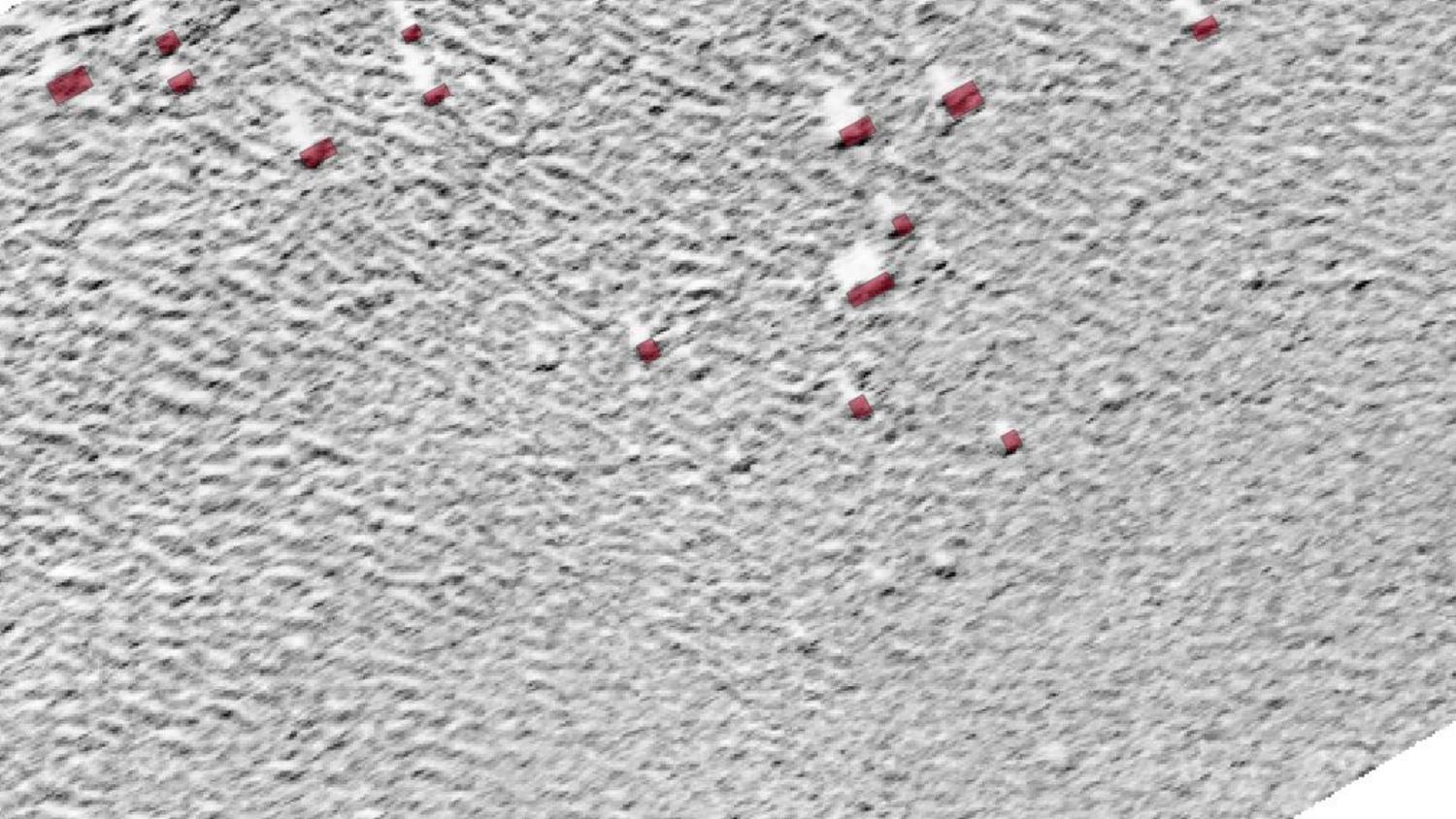
Zowi: We train our models on side-scan sonar data, which gives a 3D representation of the seabed. Harder elements appear darker, and they cast lighter ‘shadows’ where the sonar signal is blocked. By combining these visual cues, the model learns to spot boulders and other objects, just like a human expert would.
Kapernikov: What is the main advantage of using AI?
Zowi: Consistency and scalability. The AI doesn’t get tired, so the output doesn’t depend on which human is looking at the data that day. And it’s much faster—it’s way easier to clone your computer than to clone humans! This allows GEOxyz to deliver quality data to their clients much faster.
Kapernikov: How was the collaboration with GEOxyz?
Zowi: It was a true partnership. We brought the AI knowledge, and GEOxyz brought the business logic. We worked directly with their software team to integrate our tool into their workflow. We aren’t removing the human from the loop—quality control is still essential—but we’re making the processing phase much more efficient.